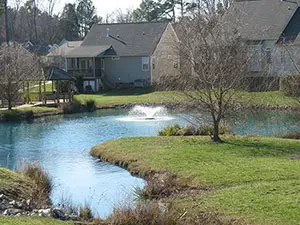
Stormwater Control Measures (SCMs) play an important role in managing runoff and protecting surrounding properties. For homeowners associations (HOAs), commercial property owners and property managers, regular maintenance helps identify problems early and keep these systems functioning as intended.
Over time, vegetation can become overgrown, sediment can accumulate, erosion can develop and drainage structures can become obstructed or damaged. Here are six important areas to monitor during routine property checks.
1. Check Vegetation and Shoreline Growth
Look for overgrown grass, excessive aquatic weeds and vegetation blocking inlets or outlets. While some vegetation is necessary, unmanaged growth can interfere with maintenance and access. Proper vegetation management helps maintain the pond’s appearance and supports its intended function.
2. Inspect Inlets and Outlets
Check drainage structures for accumulated leaves, trash, sediment or visible damage to pipes, risers and other components. Blockages can affect how water enters and exits the pond. If you notice damage or persistent obstructions, arrange for a professional evaluation.
3. Look for Shoreline Erosion
Exposed soil, gullies, exposed roots and collapsing pond banks can indicate erosion. Left unaddressed, erosion may contribute to sediment buildup and further damage along the shoreline. Identifying the source of the problem is important when determining the appropriate solution.
4. Monitor Sediment Accumulation
Stormwater runoff carries soil and other materials into ponds, where sediment can gradually accumulate. Significant buildup may reduce available storage capacity or affect system components. A professional can assess whether sediment removal or other maintenance is necessary.
5. Watch Water Levels and Drainage
Pay attention to unusual water levels, persistent standing water or drainage patterns that differ from normal conditions. The expected water level depends on the pond’s design, so recurring or unexplained changes may warrant further investigation.
6. Remove Trash and Debris
Leaves, branches and litter can accumulate around pond edges and drainage structures. Routine debris removal helps maintain the property’s appearance and reduces the risk of obstructions. Structures that are difficult to access or safely clear should be handled by qualified professionals.
7. Keep Maintenance Records Organized
HOAs and property managers should keep inspection reports, photographs, repair records and documentation of completed work. These records help track recurring issues, plan maintenance budgets and follow up on outstanding concerns.
Requirements vary by property and jurisdiction, so review the approved stormwater maintenance plan to understand the inspection schedule and reporting obligations that apply to your facility.
When Should You Call a Stormwater Professional?
Damaged outlet structures, significant erosion, persistent drainage problems, excessive sediment and recurring inspection deficiencies may require professional attention. Routine visual checks are useful, but they do not replace required inspections or repairs.
How Triangle Pond Management Can Help
Triangle Pond Management provides stormwater pond maintenance, inspections, compliance repairs, erosion control and other services for HOAs, commercial properties and property managers.
Whether you need ongoing maintenance or help addressing a specific concern, professional support can help you determine the appropriate next steps for your property.
Need help maintaining your stormwater pond? Contact Triangle Pond Management or visit our stormwater management page to learn more.