 Stormwater management systems are essential for managing the quantity and quality of runoff resulting from rain events. But one often-overlooked yet vital component of these systems is the energy dissipater—a device or structural element designed to slow down high-velocity water flows and reduce erosion. Let’s explore what energy dissipaters are, how they work, and why they are crucial to sustainable stormwater infrastructure.
What Is an Energy Dissipater?
An energy dissipater is any structure or mechanism designed to reduce the speed and erosive force of flowing stormwater. These structures are commonly installed at the outlet of culverts, storm drains, or spillways—where water typically exits a system at high velocity.
Types of energy dissipaters include:
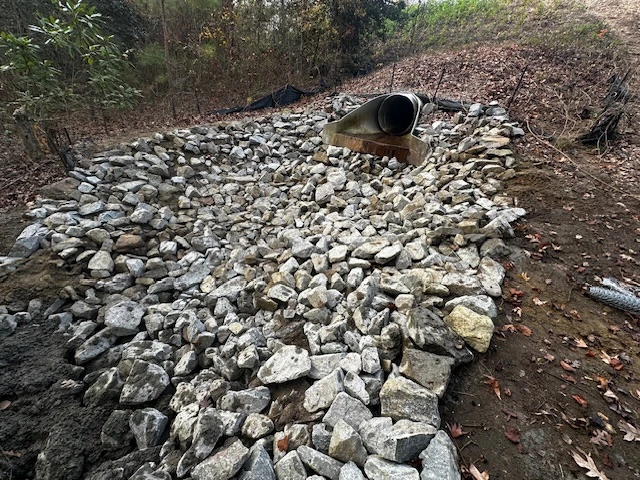
- Riprap aprons: Loose stone placed at the outlet to absorb energy and slow flow.
- Level spreaders: Distribute concentrated flow into sheet flow.
- Stilling basins: Engineered basins that allow turbulent water to settle and slow.
- Impact blocks or baffles: Concrete structures that break up flow patterns.
• Turf reinforcement mats (TRMs) or vegetated swales in lower-energy settings.
Why Are Energy Dissipaters Important?
- Erosion Control
High-velocity runoff can cause severe erosion at discharge points and downstream areas, scouring soil, undermining structures, and damaging ecosystems. Energy dissipaters reduce water speed and turbulence, minimizing this destructive potential. - Infrastructure Protection
Without energy dissipation, stormwater can erode around culverts, pipe outlets, or channel linings, potentially leading to costly failures of roads, bridges, and stormwater systems. Properly designed dissipaters extend the life and reliability of infrastructure. - Water Quality Improvement
By reducing turbulence, energy dissipaters help promote sedimentation and the settling of pollutants before stormwater enters natural water bodies. This contributes to better water quality and healthier aquatic ecosystems. - Regulatory Compliance
Many local and state stormwater regulations require energy dissipaters as part of post-construction best management practices (BMPs). Incorporating these devices helps developments meet legal requirements for stormwater discharge.The key principle behind an energy dissipater is the conversion of kinetic energy (the energy of moving water) into thermal energy and turbulence. This is achieved through: - Obstructions (like rocks or baffles) that break up flow paths.
- Changes in elevation or slope that reduce flow speed.
- Wide, shallow outlet zones that encourage sheet flow.
The design of an energy dissipater depends on factors such as flow rate, pipe size, soil type, downstream conditions, and site constraints. Hydraulic engineers use design charts, modeling, and empirical formulas to tailor each dissipater to its specific context.
Common Applications
- Culvert Outfalls: Prevent erosion at the end of storm pipes under roads or driveways.
- Stormwater Ponds: Control discharge from detention or retention basins.
- Channels and Swales: Maintain stable flow velocities in vegetated or rock-lined conveyances.
- Green Infrastructure: Support sustainable urban drainage systems (SUDS) by integrating with bioswales or rain gardens.
Energy dissipaters may not be the most visible or glamorous components of a stormwater system, but they play a critical role in protecting infrastructure and discouraging erosion in your stormwater control measures. If you have stormwater devices that are your responsibility to maintain Triangle Pond Management can help. We have an experienced staff that specializes in the maintenance of these devices as well as restoration if you find they are in a state of disrepair and out of compliance.
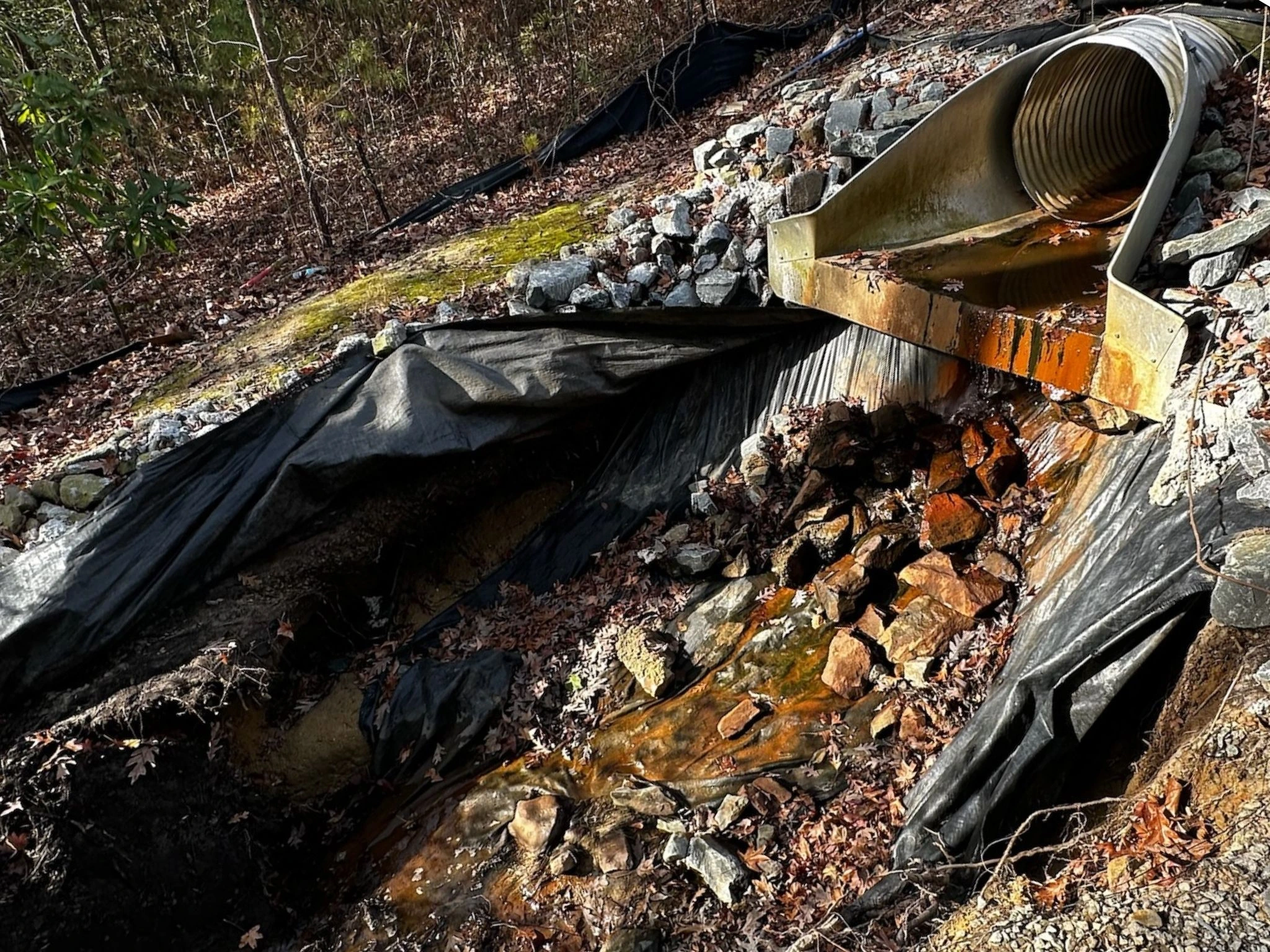
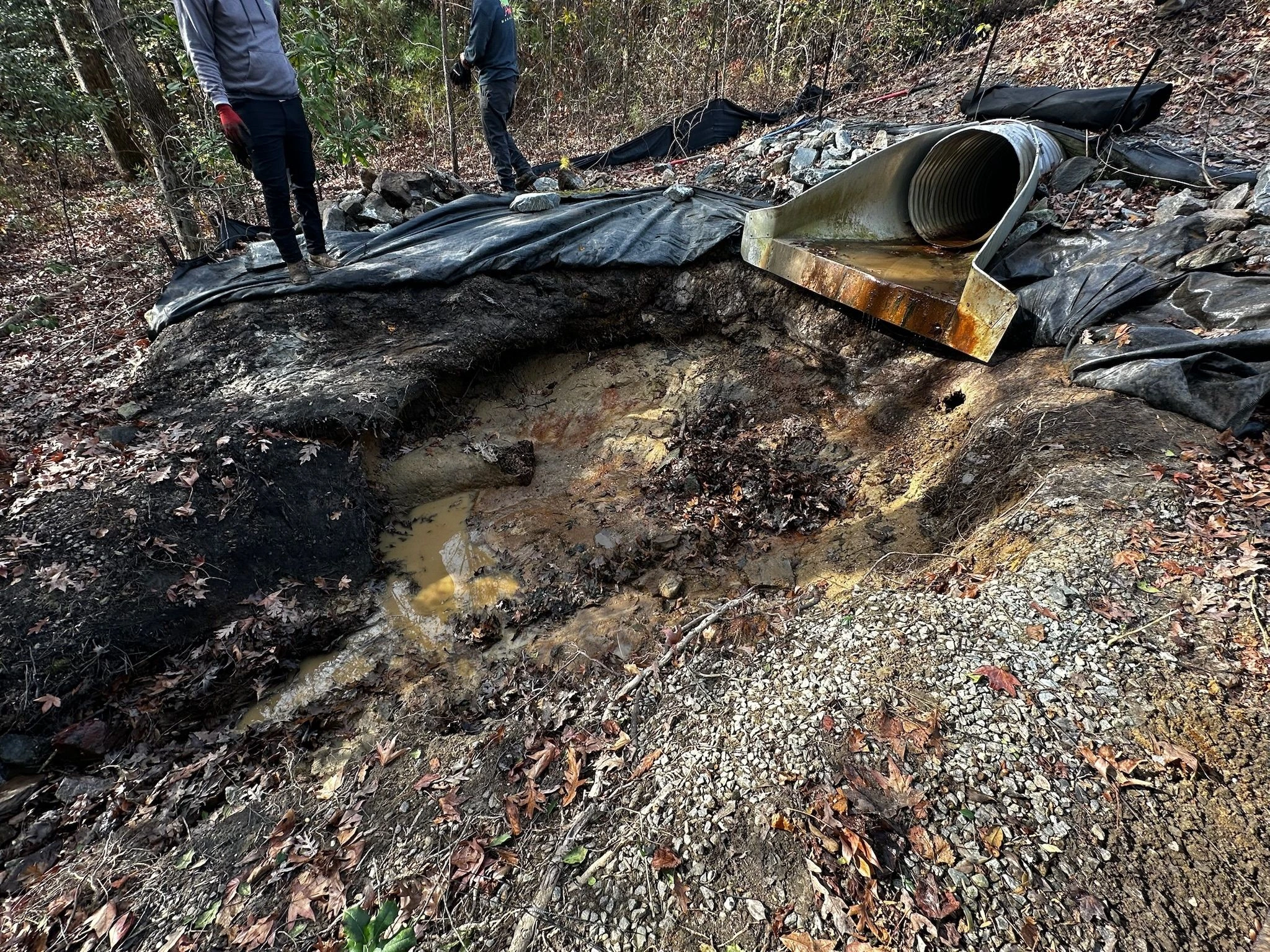
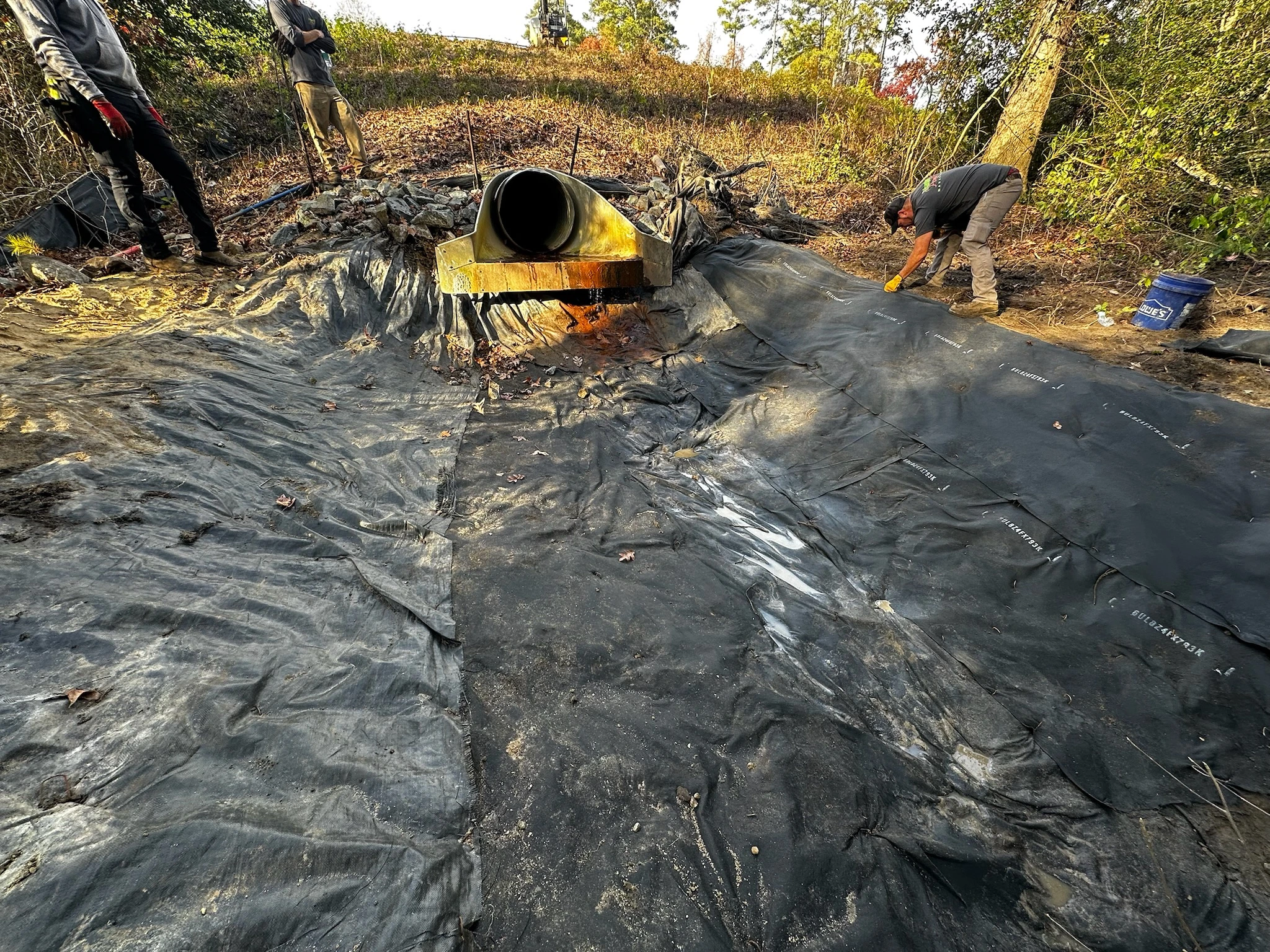
See the attached photos for a recent project completed by our experienced stormwater service team in Charlotte. They brought this washed-out dissipater back to compliance so that it can function as intended. For help on your stormwater water devices or management please contact us today!