A pond’s water level naturally fluctuates throughout the year, especially during periods of hot weather, limited rainfall, and increased evaporation. However, if you notice your pond losing water faster than usual, there may be an underlying problem that requires attention.
From leaking pond dams and burrowing animals to damaged pipes and excessive seepage, several issues can contribute to unexplained water loss. Identifying the source early is important for protecting your pond, preventing structural damage, and avoiding more extensive repairs.
Whether you own a residential pond, manage a community association, or oversee a commercial stormwater management system, understanding the common causes of pond water loss can help you determine when it’s time to call a professional.
How Much Water Loss Is Normal?
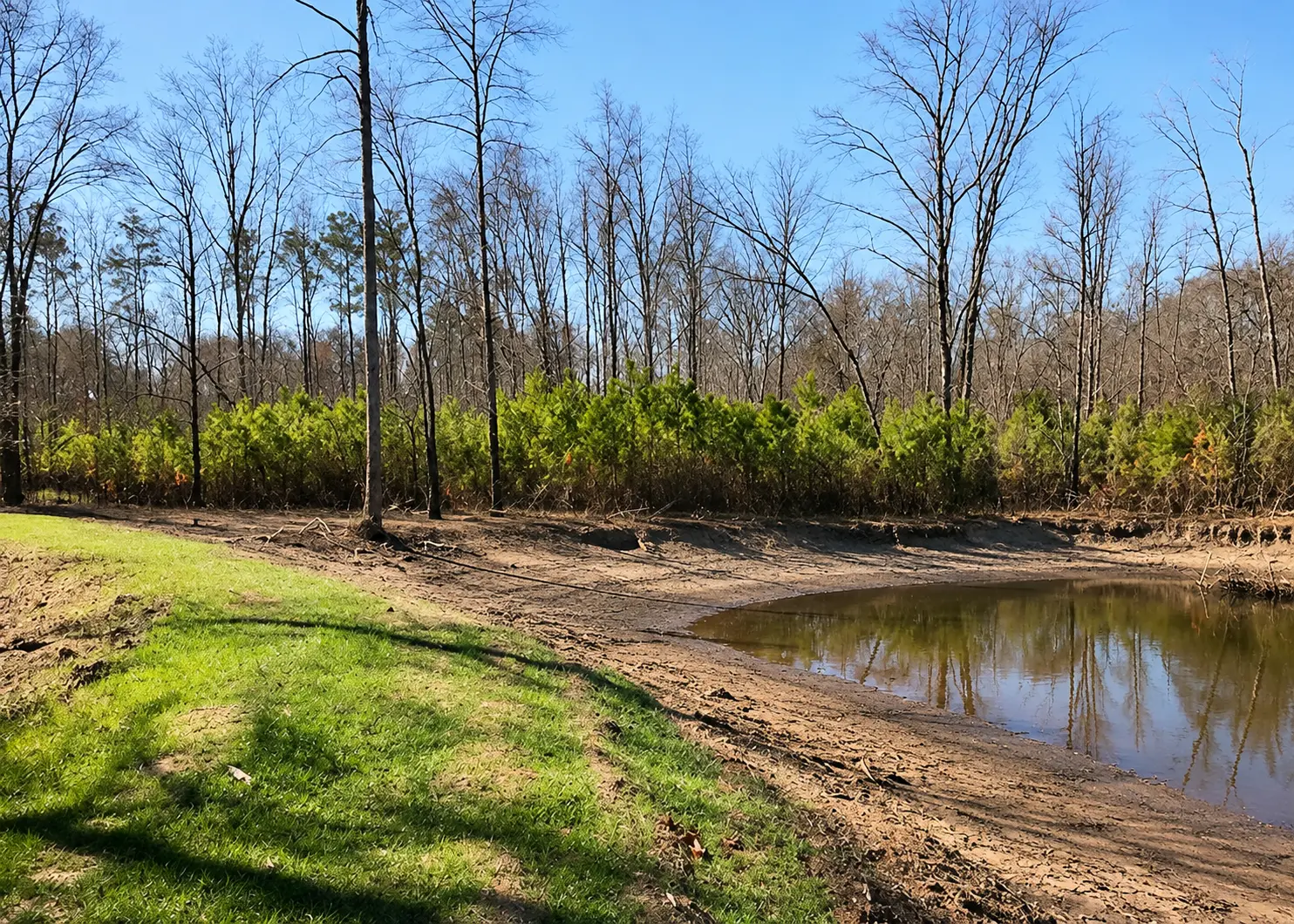 Before assuming your pond has a leak, it’s important to understand that some water loss is completely normal.
Evaporation is one of the most common reasons pond water levels drop. During the warmer months in North Carolina, high temperatures, direct sunlight, and wind can cause noticeable water loss. Smaller ponds and shallow water features may experience even greater fluctuations.
Other factors that influence water levels include:
- Temperature: Hot weather increases evaporation rates.
- Wind: Consistent wind can accelerate water evaporation.
- Rainfall: Extended dry periods can prevent ponds from replenishing naturally.
- Vegetation: Aquatic plants and surrounding vegetation contribute to water loss through transpiration.
If your pond consistently loses water despite regular rainfall, or if the water level drops significantly over a short period, it may indicate a leak or another underlying issue.
5 Common Reasons Your Pond Is Losing Water
Understanding what causes pond water loss is the first step toward finding the right solution. Here are five common problems that may be responsible.
1. A Leaking Pond Dam or Embankment
Pond dams and embankments are designed to hold water, but over time, they can develop problems that allow water to escape.
Cracks, soil settlement, erosion, and poorly compacted soil can create pathways for water to move through the dam. In some cases, water may seep through the embankment and emerge on the opposite side.
Warning signs of a potential dam leak include unusually wet areas below the dam, muddy spots, sinkholes, or patches of vegetation that appear greener than the surrounding landscape.
Because dam leaks can compromise structural integrity, they should be evaluated promptly. Small problems can become more serious if water continues moving through the embankment.
2. Muskrat and Other Animal Damage
Burrowing animals, particularly muskrats, can cause significant problems for pond banks and dams.
Muskrats dig tunnels into pond embankments, often creating underwater entrances and extensive burrow systems. These tunnels can allow water to travel through the dam, weakening its structure and contributing to leaks.
Over time, burrowing activity can lead to erosion, soil instability, and even partial dam failure.
If you notice holes along the shoreline, unusual depressions in the bank, or wet areas on the downstream side of the dam, animal activity may be contributing to your pond’s water loss.
Addressing the damage involves more than simply filling in visible holes. The underlying tunnels and compromised soil must also be evaluated and properly repaired.
3. Damaged Pipes, Drainage Structures, or Outlet Systems
Many ponds, particularly stormwater management ponds, rely on pipes, risers, and outlet structures to regulate water levels and control drainage.
Over time, these components can deteriorate, become displaced, or develop cracks. Damaged connections and leaking underground pipes may allow water to escape without creating obvious signs around the pond.
In stormwater management systems, outlet structure problems can also affect how water moves through the pond and whether the system functions as designed.
Routine inspections can help identify deteriorating infrastructure before it leads to more significant problems. When water loss is suspected, a professional evaluation can help determine whether the issue originates from the pond itself or its drainage system.
4. Cracks or Damage to the Pond Liner
Some ponds rely on synthetic liners to prevent water from seeping into the surrounding soil. While liners provide an effective barrier, they can become damaged over time.
Common causes of liner damage include:
- Tree roots growing beneath or against the liner.
- Sharp rocks or debris puncturing the material.
- Shifting or settling soil.
- Aging and deterioration from prolonged exposure.
- Damage caused by maintenance equipment or wildlife.
Even a relatively small puncture can result in ongoing water loss.
Locating the damaged area is an important first step.
Depending on the material and extent of the damage, repairs may involve patching the liner or replacing a larger section.
5. Excessive Seepage Through the Pond Bottom or Banks
Not all pond leaks are caused by visible damage. Sometimes, water gradually escapes through the soil beneath the pond or along its banks.
Certain soil types, inadequate compaction, and changes in soil conditions can contribute to excessive seepage. Ponds constructed in areas with porous soils may be particularly susceptible if the bottom and banks were not properly prepared.
Unlike a damaged pipe or obvious hole, seepage can be difficult to identify because water may slowly move through the surrounding soil without creating a visible leak.
Depending on the severity and cause, potential solutions may include soil compaction, appropriate soil-sealing materials, or more extensive pond rehabilitation.
How Can You Tell If Your Pond Has a Leak?
Although normal evaporation can cause water levels to fluctuate, certain warning signs may indicate a more serious problem.
Watch for:
- Water levels dropping faster than expected, even after rainfall.
- Wet, muddy, or unusually saturated areas around the pond.
- Patches of unusually green vegetation along the dam or downstream slope.
- Sinkholes or depressions near the pond banks.
- Visible cracks, erosion, or damage to the embankment.
- Water continuing to disappear despite cooler temperatures and reduced evaporation.
One helpful first step is to monitor your pond’s water level over several days. Record changes and take note of recent rainfall and weather conditions. This information can help a pond management professional determine whether the water loss is consistent with normal evaporation or warrants further investigation.
How Are Pond Leaks Repaired?
The right repair depends on where the water is escaping and what caused the problem. There is no single solution that works for every pond.
Depending on the situation, repairs may involve:
- Dam and embankment repair: Addressing erosion, compromised soil, and structural damage.
- Animal damage remediation: Identifying burrows and repairing the affected areas of the pond bank or dam.
- Pipe and outlet repairs: Repairing or replacing damaged drainage pipes, risers, and other water-control structures.
- Liner repairs: Locating punctures or tears and patching or replacing damaged sections.
- Soil sealing: Using appropriate materials and techniques to reduce excessive seepage through the pond bottom or banks.
- Pond rehabilitation: Addressing more extensive problems that require restoration of the pond’s structure or surrounding areas.
Simply adding water to a leaking pond or applying a sealant without identifying the underlying cause may only provide temporary relief. A proper assessment helps ensure that repairs address the actual source of the problem.
Why Early Pond Leak Detection Matters
A pond that continually loses water may seem like a minor inconvenience at first, but ignoring the problem can lead to more extensive damage.
Water moving through a dam or embankment can gradually weaken the surrounding soil. Erosion may worsen, structural components can deteriorate, and the cost and complexity of repairs may increase.
For homeowners, this can mean damage to the pond and surrounding property. For HOAs and commercial property managers, pond problems can also affect stormwater management performance and create additional maintenance concerns.
Identifying problems early helps protect your investment, maintain proper pond function, and reduce the likelihood of costly repairs down the road.
When Should You Call a Pond Management Professional?
If your pond is experiencing unexplained water loss, a professional evaluation can help determine whether the issue is related to evaporation, seepage, structural damage, or a failing drainage component.
Professional assistance is especially important if you notice:
- Persistent water loss that cannot be explained by weather conditions.
- Wet areas or active seepage near a pond dam.
- Sinkholes or visible damage along the embankment.
- Evidence of burrowing animals.
- Problems with pipes, risers, or outlet structures.
Suspected dam seepage, especially when accompanied by muddy water, increasing wet areas, or sinkholes, should be evaluated promptly because it may indicate a developing structural problem.
Protect Your Pond with Professional Management and Repairs
Your pond is an important part of your property’s landscape and, in many cases, its stormwater management system. When water levels begin dropping unexpectedly, identifying the cause is essential to preventing further damage.
Whether the problem involves a leaking dam, animal damage, deteriorating infrastructure, or excessive seepage, addressing the issue early can help preserve your pond and protect the surrounding property.
Triangle Pond Management provides professional pond management and stormwater services to help property owners, HOAs, and commercial clients maintain healthy, properly functioning ponds.
If your pond is losing water and you aren’t sure why, contact Triangle Pond Management to discuss your concerns and learn how professional pond evaluation and repair services can help.