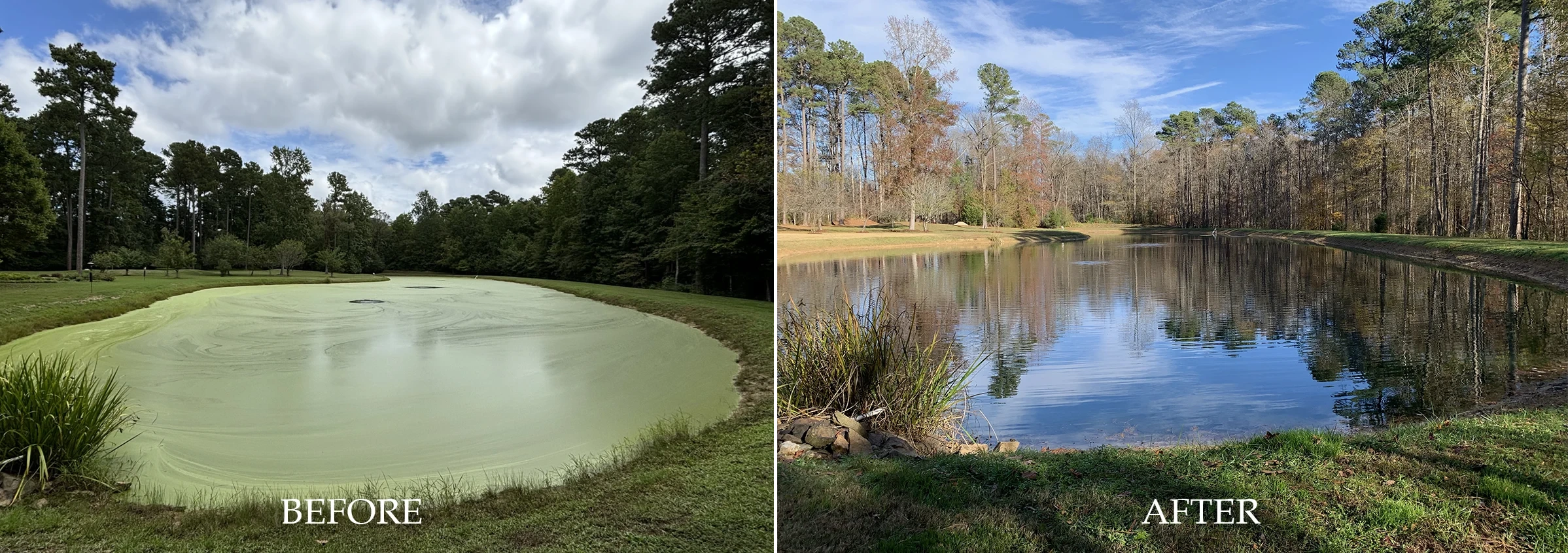
North Carolina is no stranger to hot summers and periods of low rainfall, and when drought conditions set in, pond owners often notice an alarming change: clear water turning green seemingly overnight.
While it may look sudden, this change is actually the result of a perfect environmental imbalance. Warm temperatures, stagnant water, and concentrated nutrients create ideal conditions for algae to thrive.
At Triangle Pond Management, we help property owners, HOAs, and commercial clients across North Carolina restore pond health during drought conditions through aeration, treatment, and long-term pond management solutions.
Why Ponds Turn Green During Drought Conditions
Drought doesn’t just reduce rainfall—it fundamentally changes how a pond functions. When water levels drop and inflow slows down, several things happen at once:
- Water becomes stagnant with less circulation
- Temperatures rise faster and stay higher
- Nutrients become more concentrated
- Oxygen levels begin to decline
This combination creates the ideal environment for algae growth, especially in shallow or nutrient-rich ponds.
How Warm, Stagnant Water Fuels Algae Growth
Algae naturally exist in most ponds, but they only become a problem when conditions allow them to dominate.
During drought conditions:
- Higher water temperatures accelerate algae reproduction
- Reduced circulation allows algae to accumulate at the surface
- Increased sunlight penetration into shallower water boosts photosynthesis
- Excess nutrients from runoff and organic matter feed rapid growth
The result is often a green, murky appearance commonly referred to as an algae bloom. In severe cases, this can also lead to surface scums, foul odors, and oxygen depletion that impacts fish and aquatic life.
The Hidden Problem: Nutrient Concentration
One of the most overlooked effects of drought is nutrient buildup. As water levels drop, nutrients such as nitrogen and phosphorus become more concentrated. These nutrients often come from:
- Lawn fertilizers
- Stormwater runoff
- Decaying leaves and organic debris
- Sediment buildup at the bottom of the pond
With less water to dilute them, these nutrients become a direct fuel source for algae growth, accelerating bloom conditions.
Common Signs Your Pond Is Being Affected by Drought
Property owners typically notice several warning signs during extended dry periods:
- Sudden green or cloudy water
- Thick algae mats forming near the shoreline
- Fish gasping or showing stress near the surface
- Strong or unpleasant odors
- Increased mosquito activity around stagnant water
- Visible drop in water level exposing shoreline edges
These symptoms often worsen quickly without intervention.
What You Should Avoid Doing
When ponds start turning green, many property owners attempt quick fixes that can make the problem worse.
Avoid:
- Over-applying algaecides without diagnosis
- Treating symptoms without addressing circulation or oxygen levels
- Ignoring low water conditions and waiting for rain to fix the issue
- Adding chemicals without understanding nutrient levels
Algae blooms are usually a symptom of a larger imbalance, not a standalone issue.
How Triangle Pond Management Helps Restore Balance
The good news is that drought-related algae problems can be managed effectively with the right approach.
Aeration Systems (Primary Long-Term Solution)
One of the most effective ways to combat algae during drought is improving oxygen and circulation. Triangle Pond Management designs and installs pond aeration systems that:
- Increase dissolved oxygen levels
- Improve water circulation
- Reduce stagnation and thermal stratification
- Help prevent recurring algae blooms
- Learn more about aeration solutions:
Algae and Aquatic Vegetation Control
In active bloom conditions, targeted treatments may be necessary to regain control. Our team provides professional aquatic vegetation and algae management services designed to:
- Treat existing algae growth
- Restore water clarity
- Maintain safe conditions for fish and wildlife when properly managed
- Prevent rapid regrowth when paired with aeration
Pond Maintenance & Management Programs
Long-term pond health requires more than one-time treatment. We offer ongoing pond management programs that include:
- Routine inspections
- Water quality monitoring
- Nutrient and sediment management strategies
- Preventative care to reduce future algae outbreaks
Stormwater Pond Support & Nutrient Control
For HOA and commercial stormwater ponds, runoff is often the main driver of nutrient overload. We help manage:
- Sediment accumulation
- Nutrient inflow from surrounding landscapes
- Structural and ecological pond balance
This is especially important during drought when dilution is minimal.
Why Professional Help Matters During Drought
Every pond reacts differently to drought conditions. Factors like depth, design, nutrient load, and surrounding land use all play a role in how quickly algae blooms develop.
Professional evaluation helps identify:
- Whether oxygen levels are too low
- If nutrients are driving algae growth
- Whether circulation systems are needed
- If long-term management is required
Without this insight, many ponds cycle through repeated algae problems year after year.
Get Help Before Conditions Get Worse
Drought conditions put extra stress on already vulnerable pond systems. The longer algae blooms are left untreated, the more difficult they become to manage. Triangle Pond Management provides expert pond evaluation, aeration solutions, algae treatment, and long-term maintenance programs to restore and protect pond health across North Carolina.
Contact Triangle Pond Management today to schedule a pond assessment and get ahead of algae problems before they worsen.