As urban development increases, so does the volume of stormwater runoff, leading to flooding, erosion, and pollution in our waterways. One effective green infrastructure solution is bioretention, a method that captures and treats stormwater using soil, plants, and natural filtration. In this post, we share the story of a recent bioretention conversion project that transformed a traditional drainage area into a sustainable, functional, and visually appealing stormwater management system.
The Project: Temporary Basin Conversion to Fully Functioning Bioretention Cell
Modern bioretention pond designs are constructed with an engineered system of layers that allow for excellent nutrient and pollution removal from stormwater runoff. They are designed to capture and release stormwater at a calculated rate of approx. 1” per hour through perforated underdrains at the bottom layer of the system. This ensures adequate nutrient and pollution removal. It also ensures that any plantings that are present can persist in the pond.
Design and Implementation
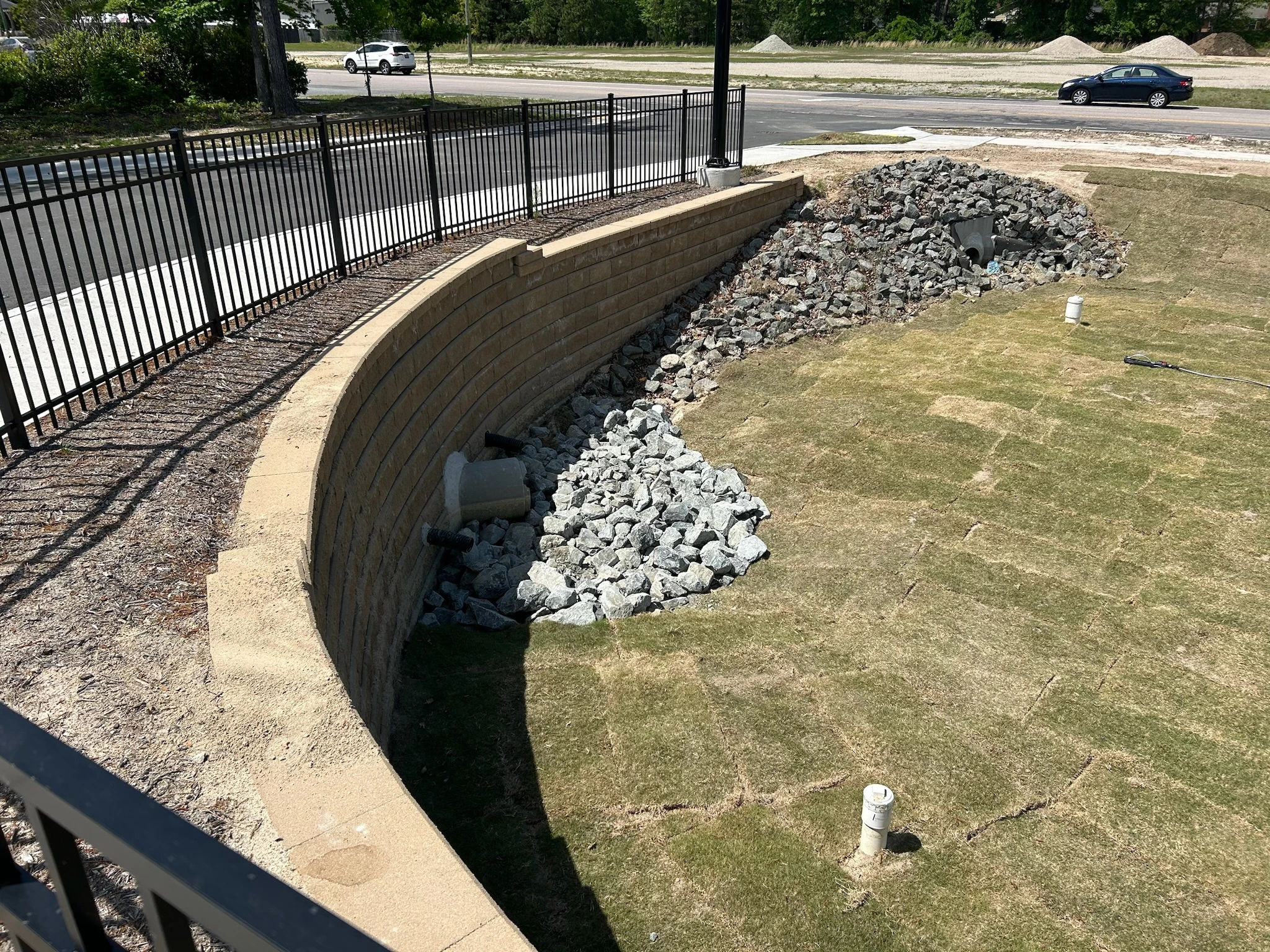
The bioretention system was carefully constructed per design with the following components:
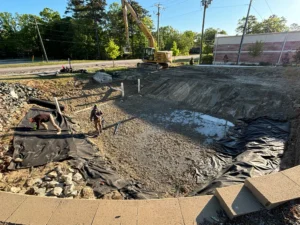
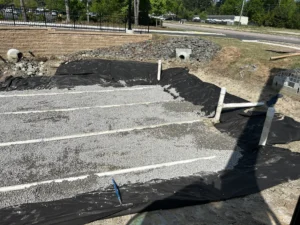
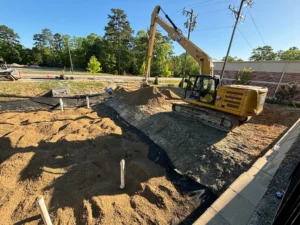
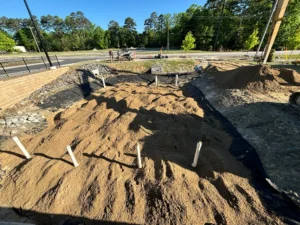
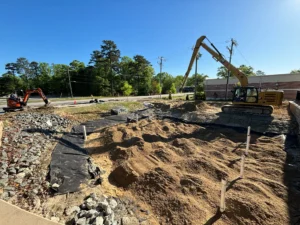
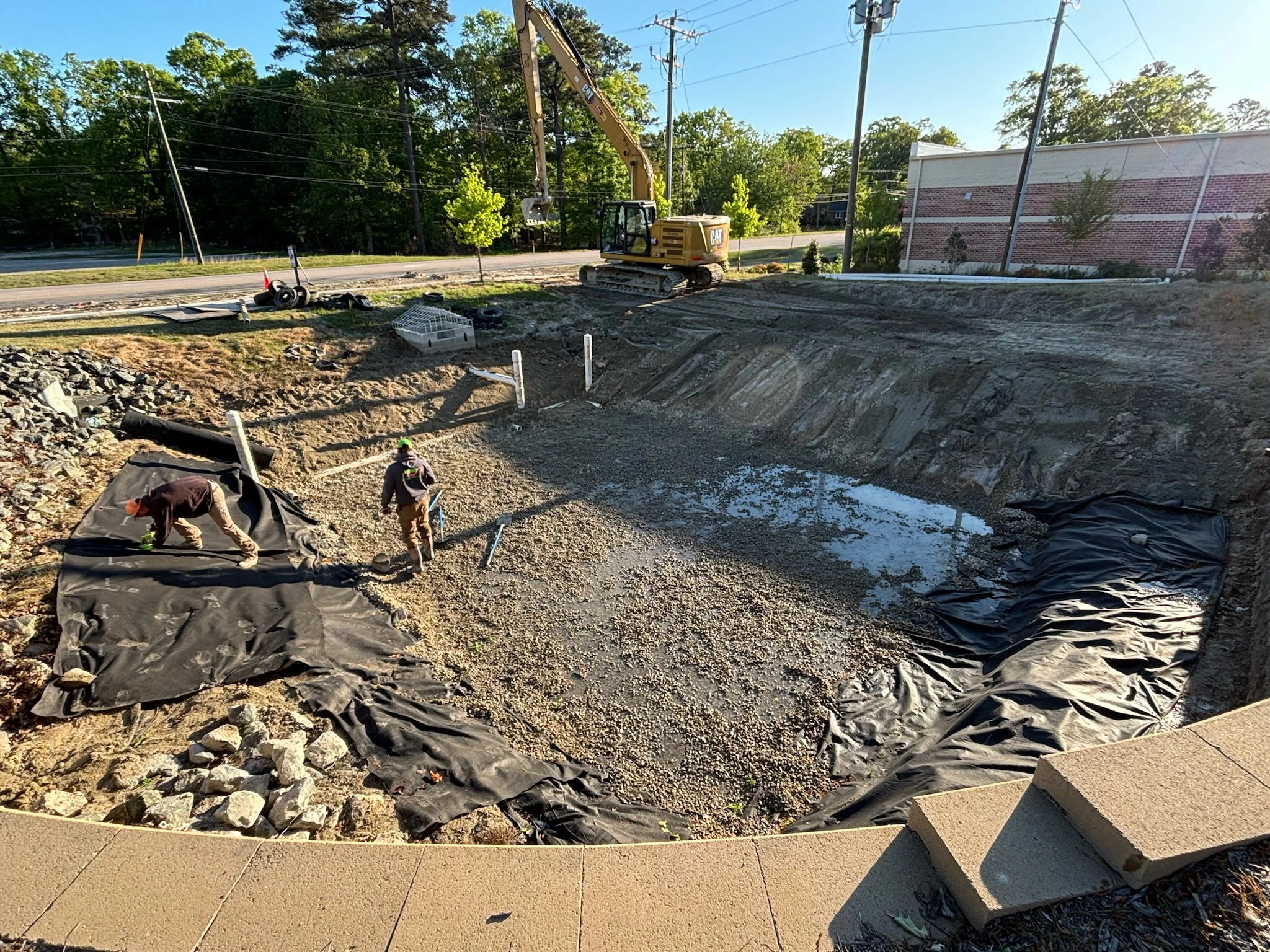
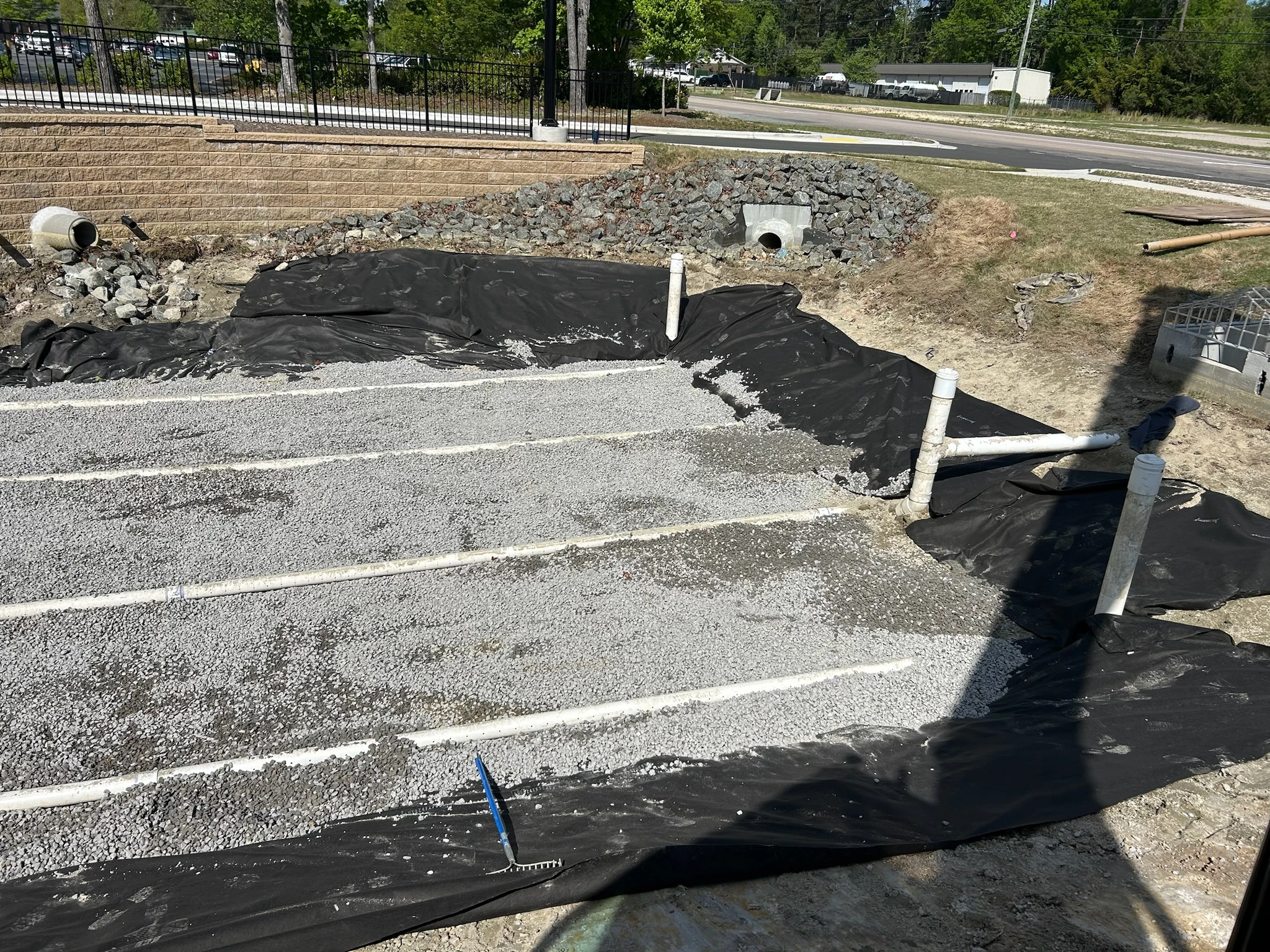
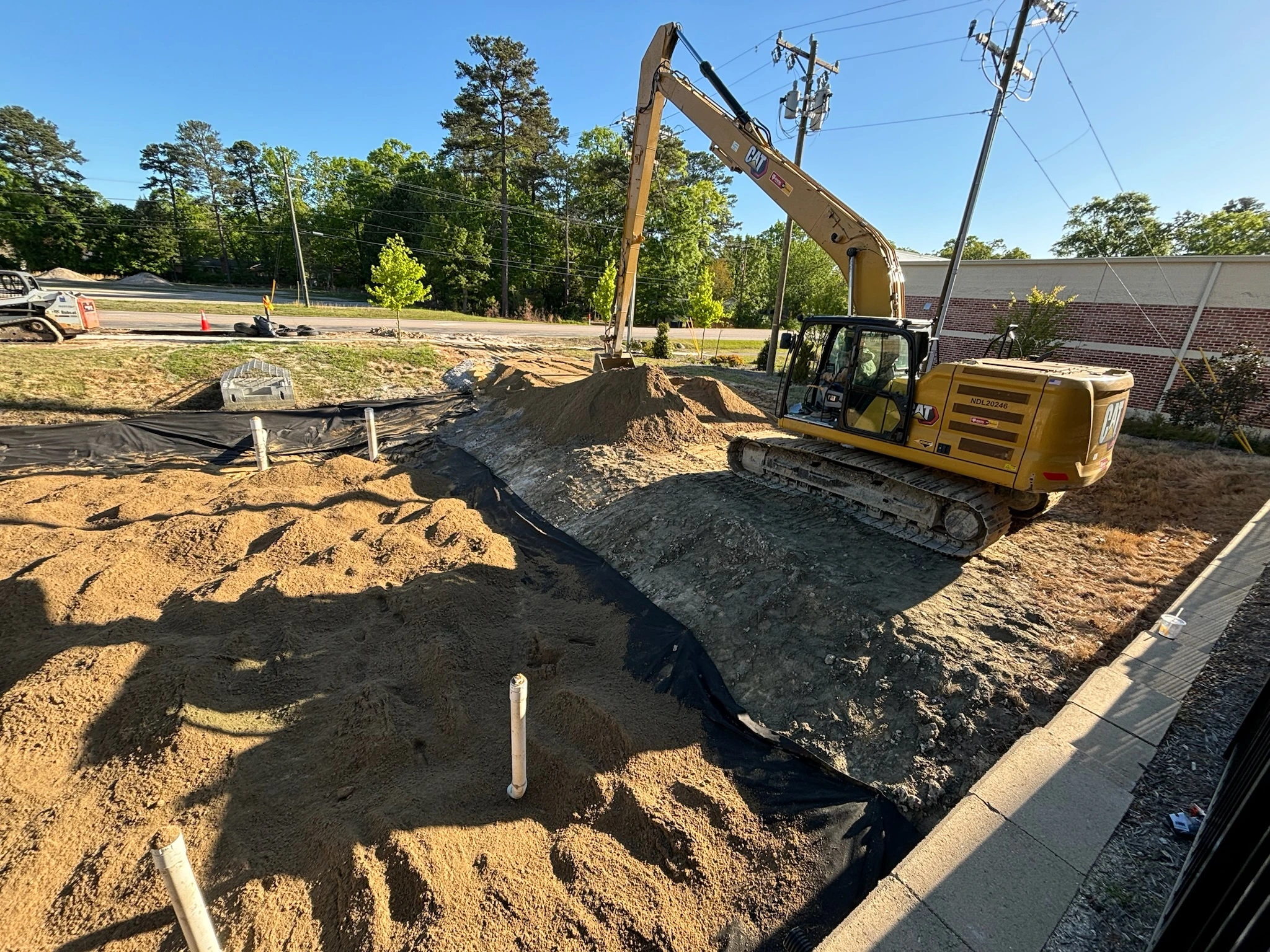
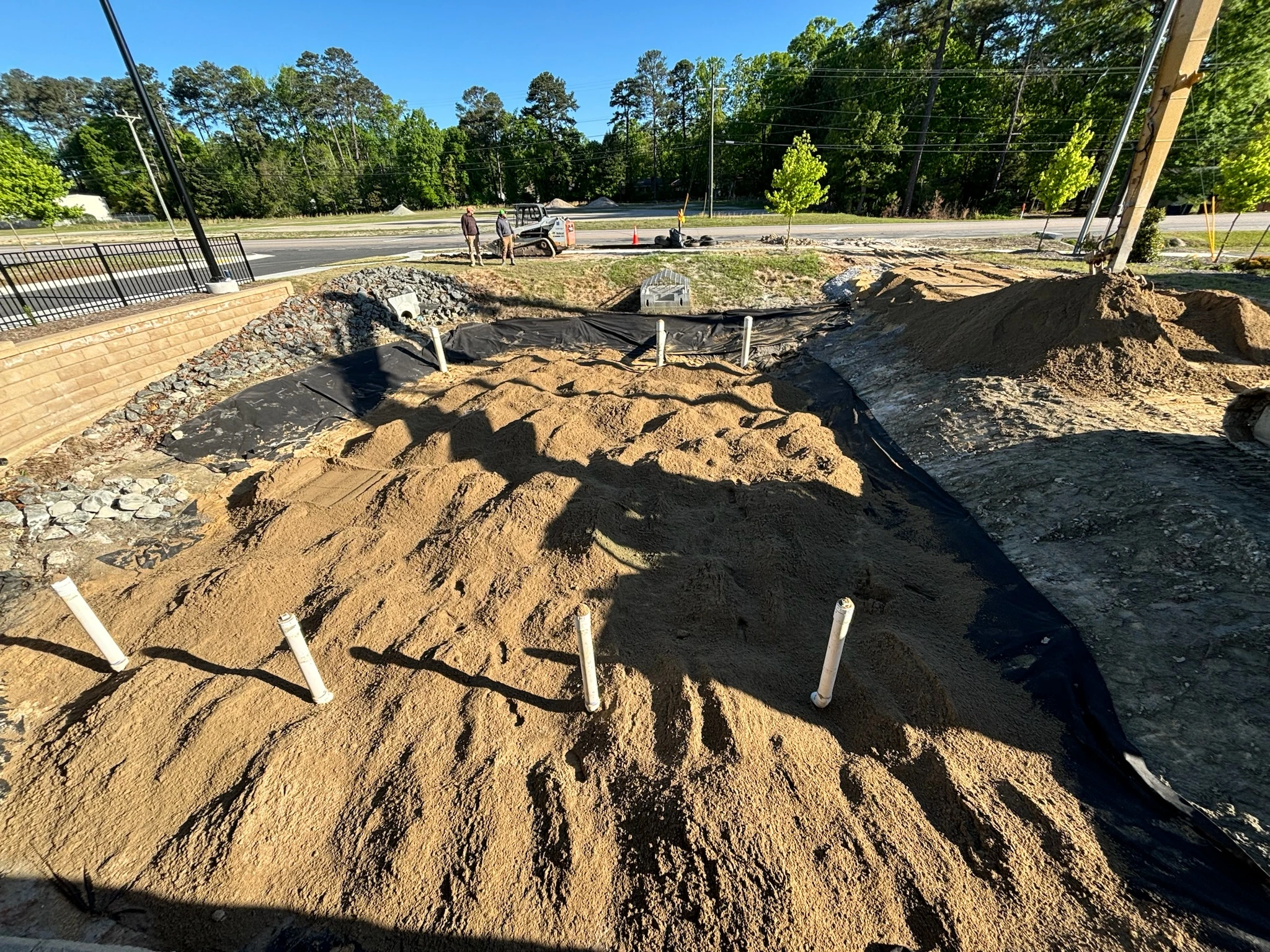
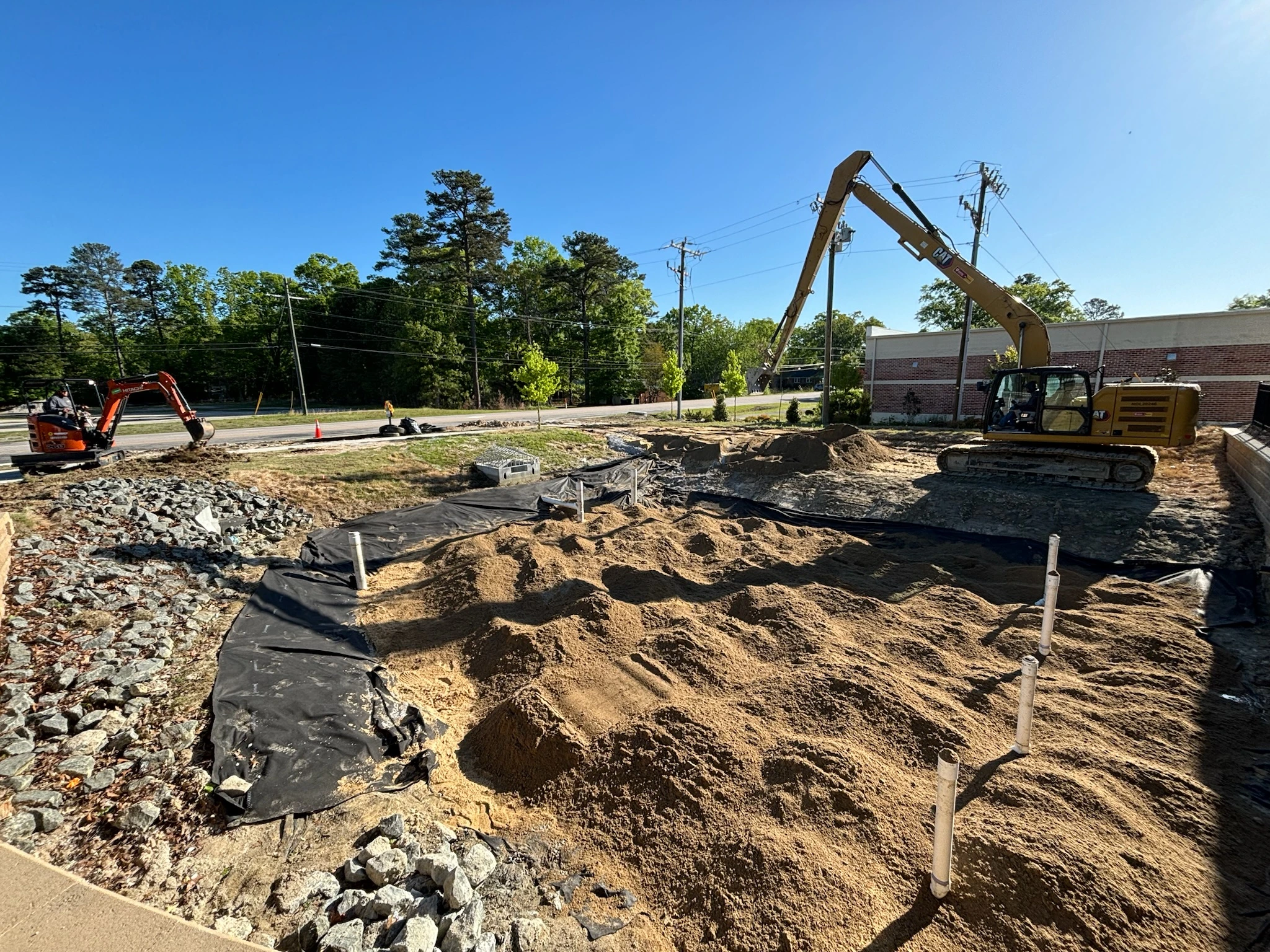
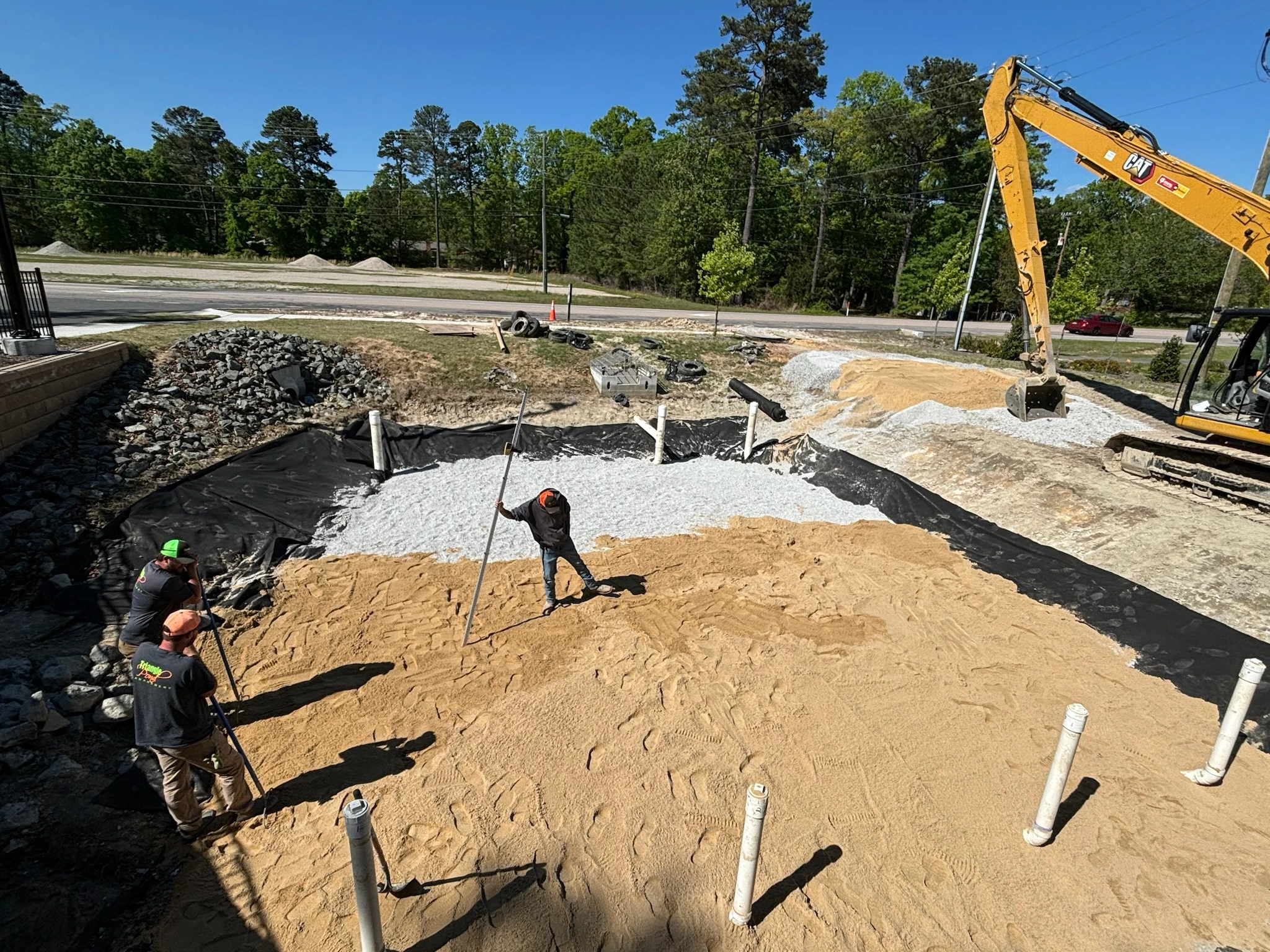
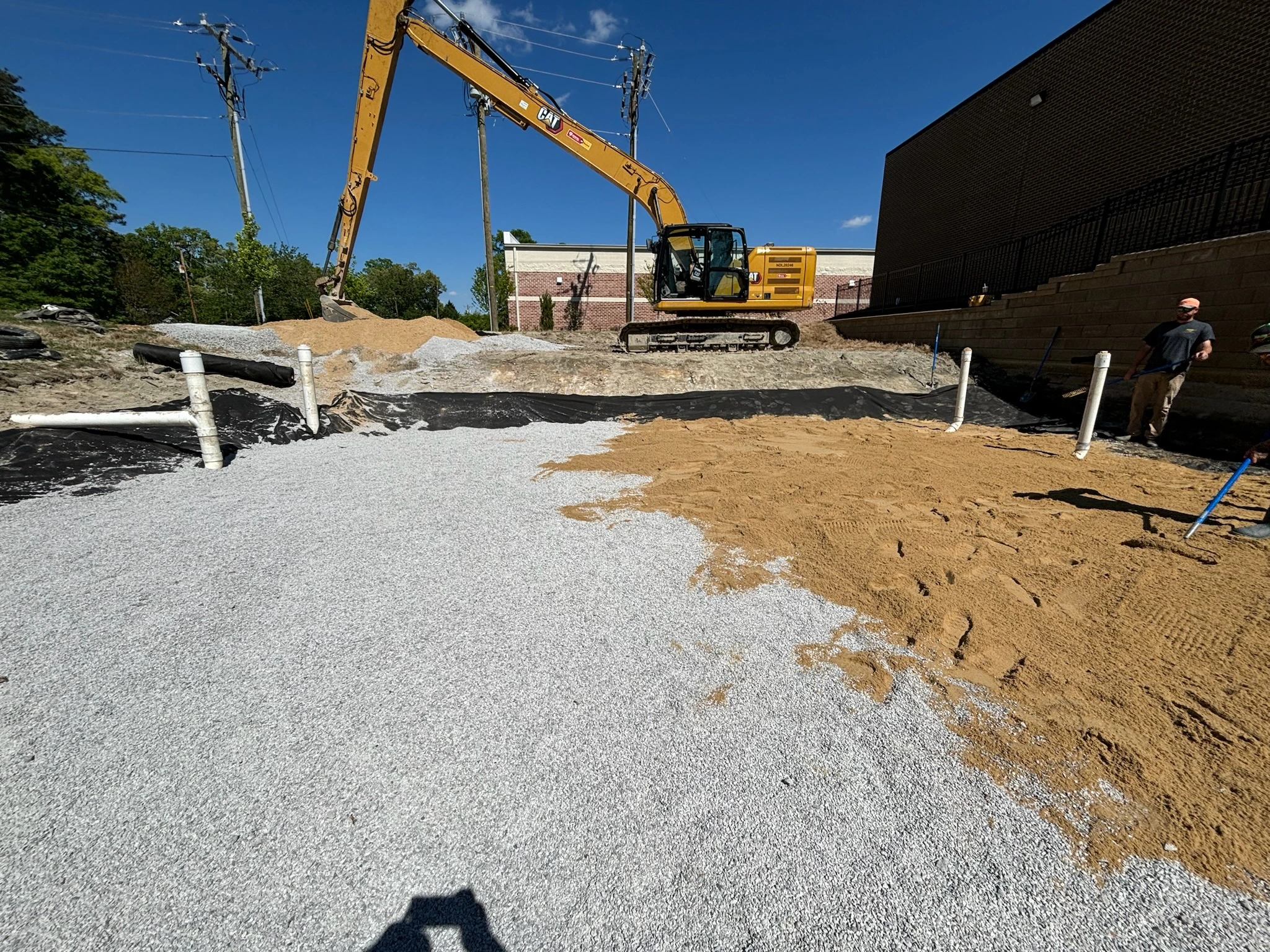
- Excavation and Grading: Existing soils which are collected during the site construction are removed to prepare for the installation of the filter layers in the basin.
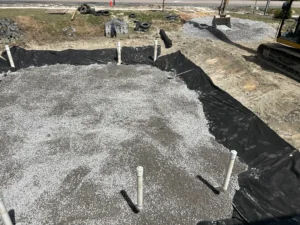
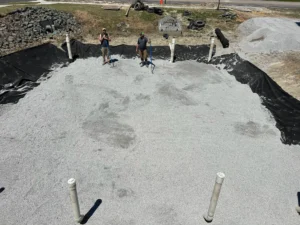
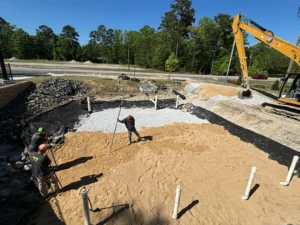
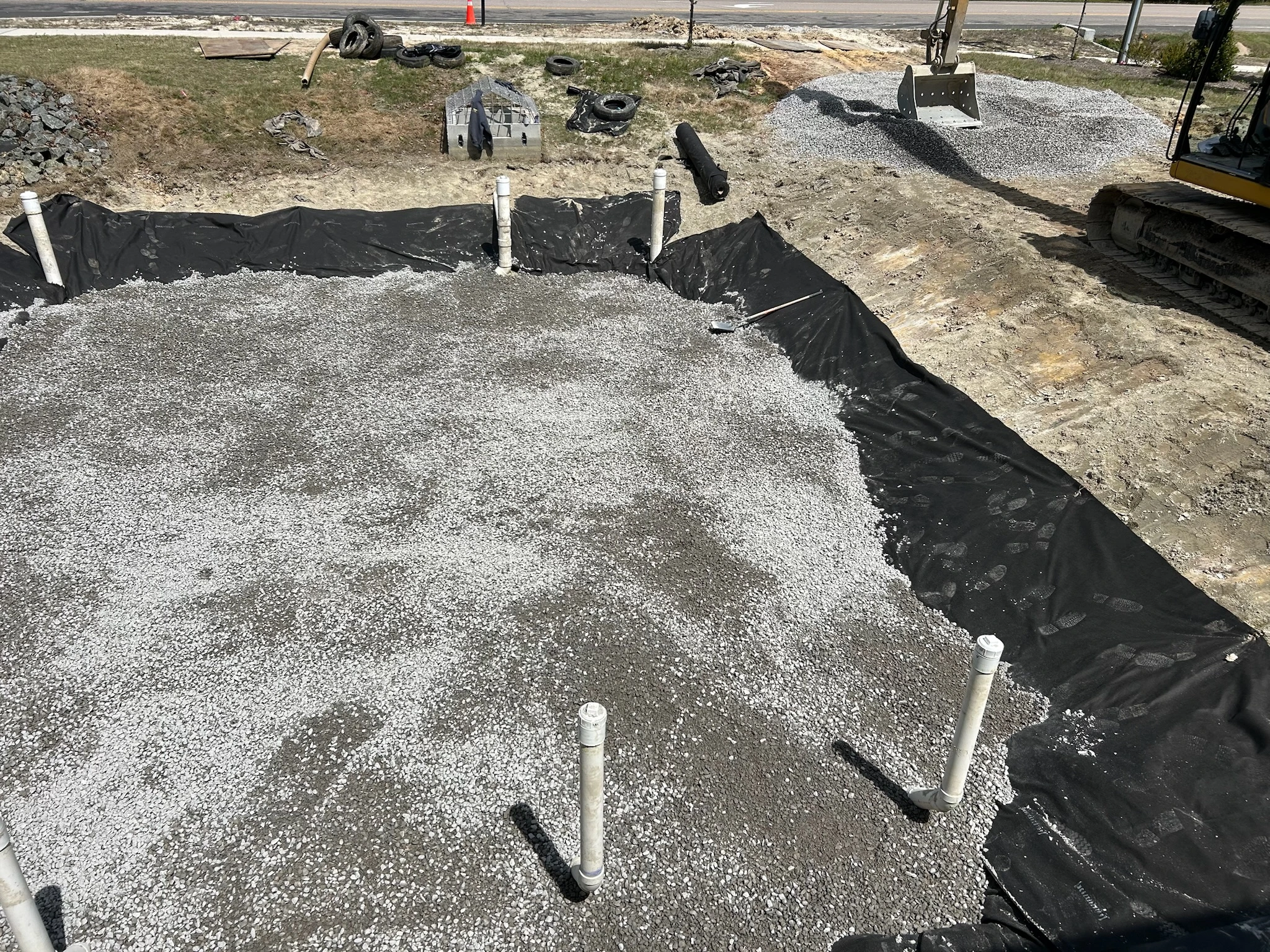
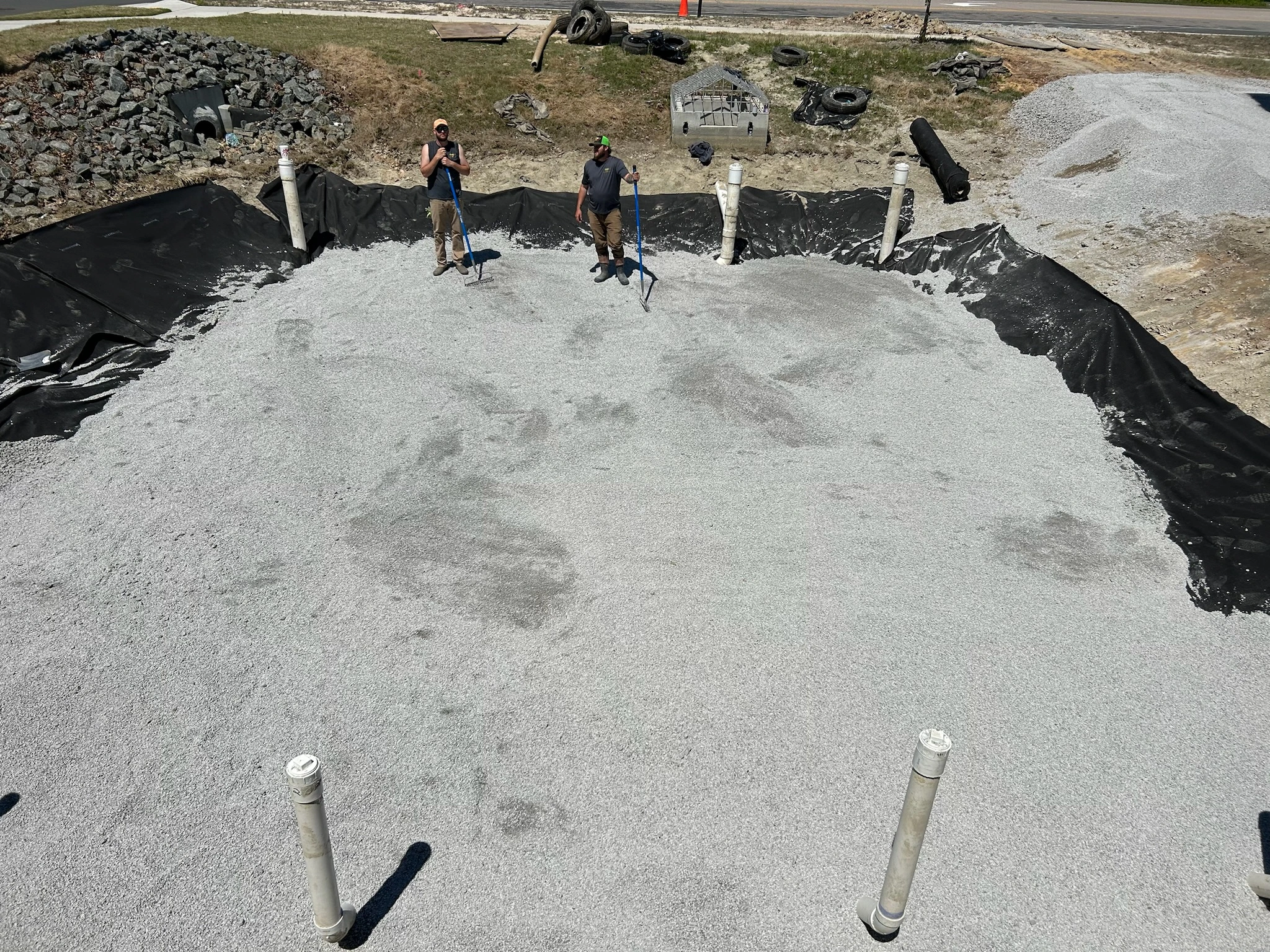
- Underdrain System: A perforated pipe underdrain system was installed to prevent standing water while slowly releasing filtered runoff back into the storm sewer system.
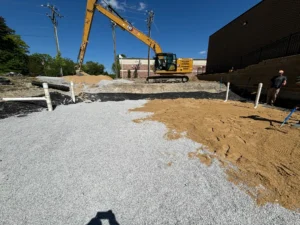
- Media installation: Different sizes of aggregate stone along with a specialized soil mix designed for filtration and plant support is installed.
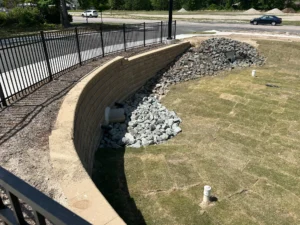
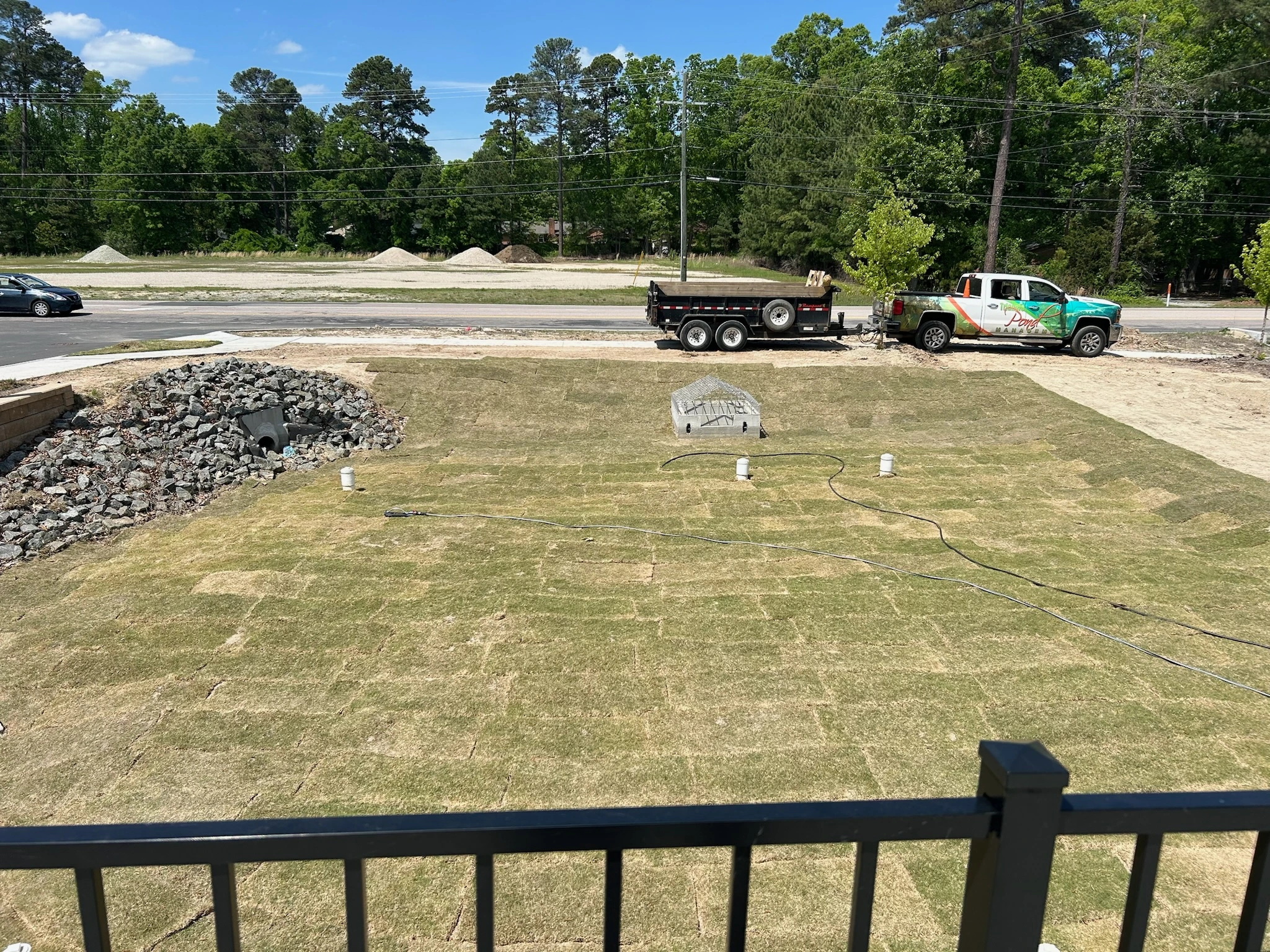
- Inlet Construction: Where stormwater inflows into the basin class-b riprap dissipator pads are installed to prevent erosion and sediments from entering the basin.
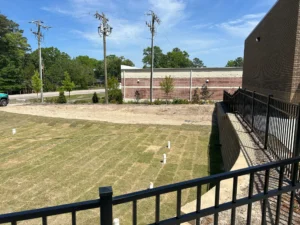
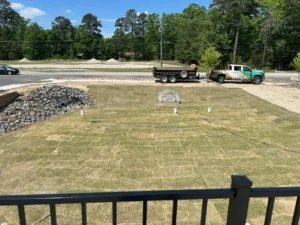
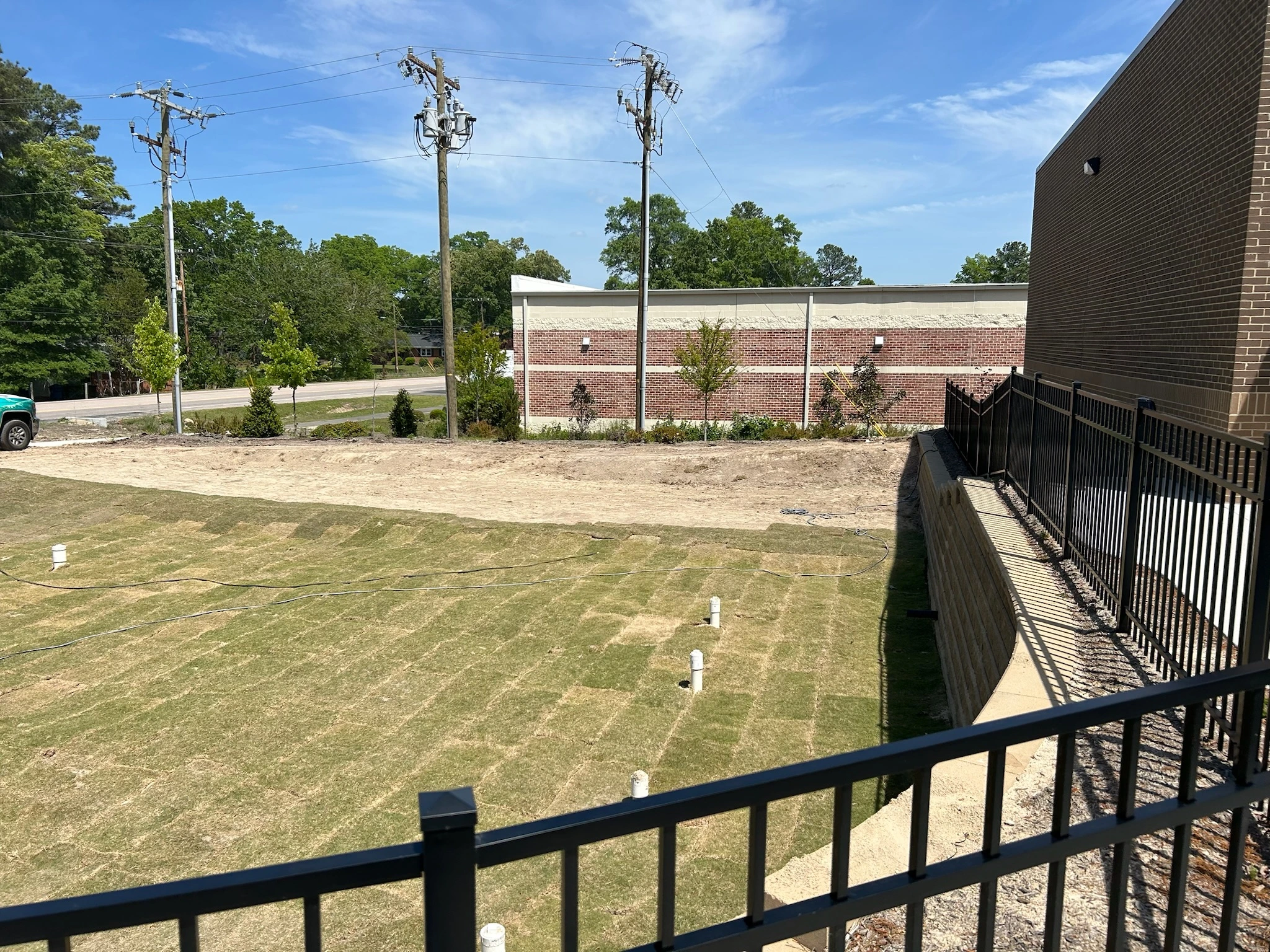
- Vegetation: Some bioretention designs can be mulched at the top layer with various plantings including shallow root trees and shrubs. This design called for Bermuda sod which was installed as the final part of the project.
Results and Benefits
Within weeks of installation, the new bioretention areas began functioning as intended. Key outcomes included:
- Significant removal of pollutants such as suspended solids and hydrocarbons
- Enhanced site beauty and biodiversity
- Positive community feedback and increased awareness of green infrastructure
Things to Keep in Mind
- Maintenance is key: Routine upkeep—especially in the first year—a contractor specializing in the upkeep of these devices should be contracted to maintain the device.
- Early engagement matters: Involving property managers and maintenance staff from the beginning ensured smoother implementation and better long-term care.
This bioretention conversion project highlights how relatively small stormwater control measures in urban design can make a big impact. By rethinking how we manage water, we not only address environmental concerns but also create greener, more livable spaces. As communities continue to grapple with the effects of climate change and urbanization, bioretention cells offers a powerful, proven tool for managing stormwater runoff requirements.
Are you dealing with stormwater issues on your property? Triangle Pond Management specializes in stormwater management including the maintenance and repair needed to handle bioretention cells along with various other SCM’s. Contact us today for more information regarding SCM’s on your property.