Come see us June 4th-6th at The Man Expo! We will have an indoor booth showcasing all of our services, experts on standby to answer your toughest questions, and our kids’ fishing tank loaded with catfish ready to catch! Our expert bass fisherman will provide a once-in-a-lifetime fishing experience for the kids throughout the day.
We are seeking an enthusiastic Marketing Specialist to help us in our overall marketing efforts, be an integral part of the development and execution of marketing plans to reach targets from brand awareness to product promotion, and deliver effective marketing programs that will help our reputation and growth. We are looking for a competent professional who is well-versed in specialized marketing concepts, principles, and tactics, and is able to grasp consumer behavior trends and generate creative ideas.
In his latest Pondcast, Greg Wittstock with Aquascape interviewed our owner, Sam Williams. In this 20-minute interview, Sam explains how he started Triangle Pond Management and grew it to the successful company it is today.
The Wildlife Management Team at Triangle Pond recently released nearly one thousand live mallard ducks on various properties of our waterfowl clients around North Carolina.
Birds were delivered and released across the state, from the western foothills all the way to the eastern Carolina coast.
Releasing live ducks is another tool property owners can use as part of an overall management plan to attract more waterfowl. These live decoys swim and call and live in the owner’s existing habitat, which in turn catches the eyes and ears of wild ducks for increased hunting or viewing opportunities. We strongly recommend releasing live ducks on newly constructed or newly obtained areas to start establishing a property as an annual stop on the wild duck’s migration south.
Contact the Biologists on the TPM Wildlife Team for help managing your habitat for waterfowl, construction, riser drains, blinds, and planting services.
2020 has for sure been a crazy year! With all of the social distancing and craziness going on in the world people are hitting the outdoors more than ever. Dove season is quickly approaching, and next will be early bow season for the white-tailed deer. Let us help you take your Fall/Winter season to the next level with our Guided Hunting and Fishing Trips.
“Controlling Invasive Non-Beneficial Aquatic Plants with Triploid Grass Carp”
We are near the end of Summer here in good ole NC and the weeds are thriving! I know for myself I could mow my lawn three times a week and then some. This same issue is happening in aquatic ecosystems throughout the southern states and it happens every time during the spring and summer months with the mild winters not helping the problem. If you have a pond on your property you know exactly what I’m talking about? You got it! Hydrilla, Primrose, Parrots Feather, Duckweed and Watermeal just to name a few species. Some of these noxious non-beneficial plants cannot be eradicated without causing damage to the aquatic ecosystem (ie. Harming the beneficial aquatic plants, fish and wildlife) and controlling some of these plant species is a fight from late March to early October. In todays “We want to be clean and green world” how do biologically control invasive plant species that thrive in our aquatic ecosystems? If nature caused it can nature fight it? Let’s look at Triploid Grass Carp…
On March 11, 2020, life as we knew it changed. As individual states and municipalities issued a “Shelter in Place” order across the country, many Americans were forced to work remotely and home school their children via Zoom Meetings and Virtual Classroom. It seemed the only safe place was our homes, yards, and anything outdoors! People turned to their favorite local and state parks until the order was given to close those resources for social distancing. As a result, many of us went back to the ancient practices of sitting on our porches and decks while the kids played in the yard. What do people do when they’re tired of staring at computer screens doing virtual business and school? You turn to your most available resource… your home!
As many of you are aware, municipalities have become increasingly stringent with regard to enforcement of deficient conditions, they will no longer accept at the time of the annual stormwater control measure (SCM) inspection (Formally referred to as BMP). One particular hot button item that is heavily scrutinized by all municipalities is the presence of a stabilizing, hardy perennial vegetative cover in and around the SCM. Unfortunately, many of the annual inspection dates fall at a time of year that is not conducive to the establishment of a perennial (or permanent) vegetative cover from seed. With this being said, vegetative repairs performed during compromising seasons of the year (i.e. summer or winter) require repeat applications indefinitely, leaving the soil unarmored and subject to erosion for a good portion of the year. This results in increased cost burden and liability which most property owners and managers would prefer to eliminate.
During this time of staying home, it is more important than ever that we enjoy our outdoor spaces. At Triangle Pond Management, we not only create and maintain ponds, but we help beautify them as well. Our pond landscaping professionals have years of experience creating outdoor gardens that are not only aesthetically pleasing but are also easy to maintain.
Our design experience now conforms to all CDC guidelines to prevent the spread of COVID-19. We teleconference, use email to show rendered drawings, and will always maintain a minimum of six feet apart during any limited interactions with our homeowners. Allow us to beautify your pond with an outdoor garden! Fill out our online contact form or call (919) 398-3221 for a free estimate today!
Contact Us & Location
Triangle Pond Management Main Office | 405 S Rogers Ln, Raleigh, NC 27610
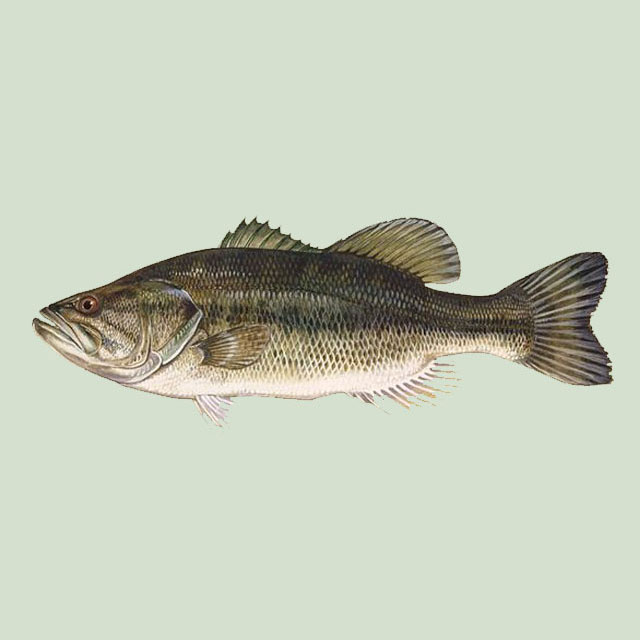
LARGEMOUTH BASS Micropterus salmoides
Largemouth Bass, the top predatory gamefish in lakes and ponds in our area, is critical in many lakes and ponds to maintain a proper ecosystem. They are considered to be fast-growing fish growing up to 1.5 pounds each year and are an excellent catch on rod or reel earning them a gamefish classification.
This will close in 90 seconds
Channel Catfish
Demo Description
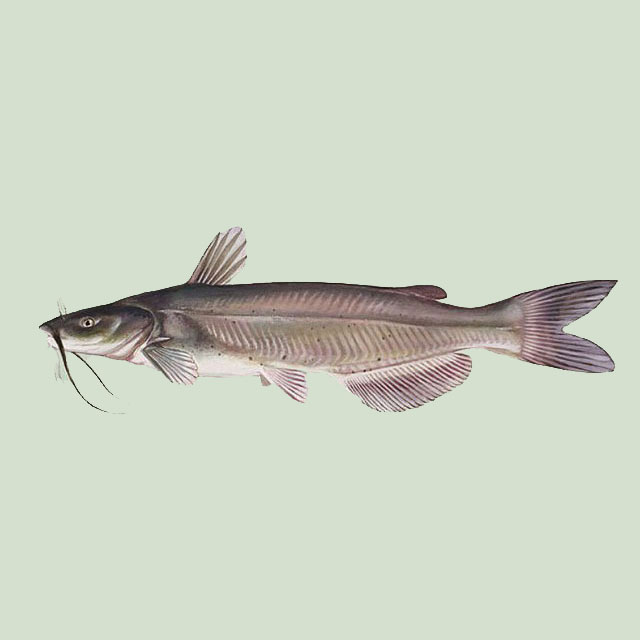
CHANNEL CATFISH Ictalurus punctatus
Channel Catfish is North America’s most numerous catfish species. They are often used to increase the general productivity of a pond without competing with the other fish. They can be stocked anytime but do not usually reproduce in ponds unless spawning containers are provided. Channel catfish grow quickly, are fun to catch, and are delicious to eat. They are an excellent choice for smaller ponds.
This will close in 90 seconds
Mosquitofish
Demo Description
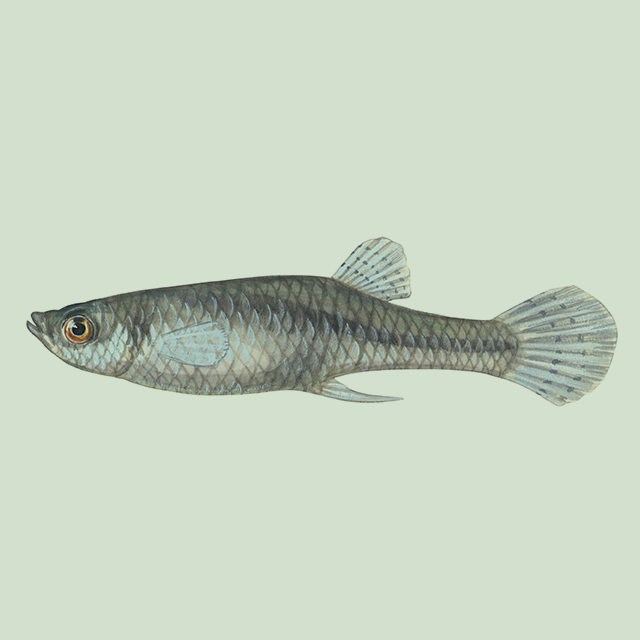
MOSQUITOFISH
Gambusia Affinis
The western mosquitofish (Gambusia affinis) is a freshwater fish native to North America and a member of the poeciliid family. It is commonly known as the mosquitofish, Gambusia, or gambezi, though these names can also refer to its sister species, the eastern mosquitofish (Gambusia holbrooki).
This will close in 90 seconds
Bluegill
Demo Description
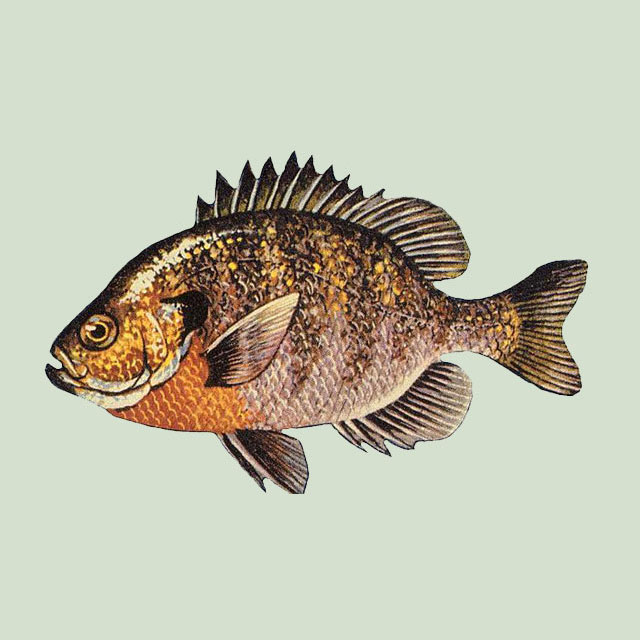
BLUEGILL Lepomis macrochirus
Bluegill, also known as “brim”, “sunfish” and “sunny” in NC, is an omnivorous fish with blue and purple on its face, olive-colored bands down the side, and orange to yellow belly. They can mature up to 12 inches long and weigh as much as 4-1/2 pounds making them an excellent source of prey for largemouth bass. As an added bonus, bluegill is fun to catch and delicious to eat. We generally recommend stocking ponds with Bluegill for “catch and release” largemouth bass fishing.
This will close in 90 seconds
Shellcracker
Demo Description
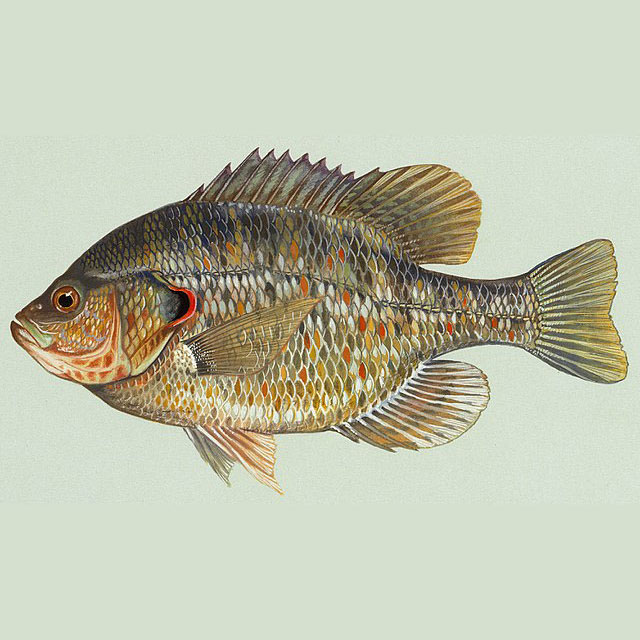
SHELLCRACKER/REDEAR SUNFISH Lepomis microlophus
The Shellcracker, otherwise known as the Redear Sunfish is a popular sport fish known for its diet of mollusks and snails (hence the name “shellcracker”). It resembles bluegill except in its coloration and slightly larger size. Like bluegill, they are fun to catch and delicious to eat. You will typically find Shellcracker fish near logs and vegetation; they tend to congregate in groups around these features. Generally maturing to 8-10 inches long and 1 pound, they can grow up to 17 inches.
This will close in 90 seconds
Fathead Minnows
Demo Description
FATHEAD MINNOWS Pimephales promelas/Gambusia
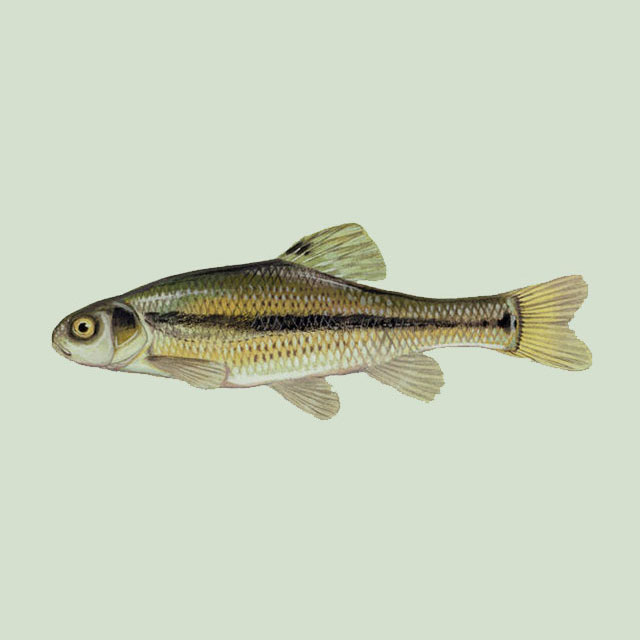
Fathead minnows are small, dull olive-grey baitfish. They have a dusky stripe extending along the back and side, and a lighter belly. Commonly used as bait for small predator fish, fathead minnows should be stocked with hybrid bluegill to provide bass with sufficient forage.
This will close in 90 seconds
Sterile Grass Carp
Demo Description
STERILE GRASS CARP Ctenopharyngodon idella
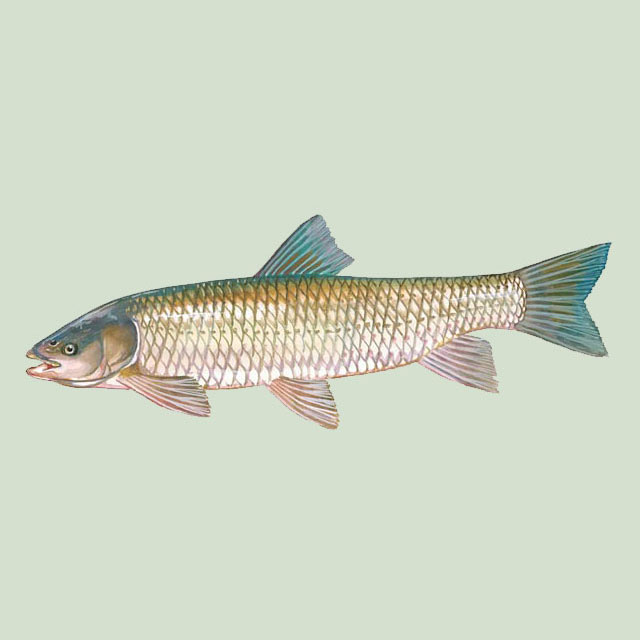
Sterile grass carp is a large herbivorous freshwater fish most often used to help control aquatic vegetation. Consuming up to triple their body weight in vegetation each day, they grow up to five pounds per year. They are known to be a relatively inexpensive long-term solution for aquatic weed control, but it’s important to stock your pond with only sterile grass carp over 8″ long when large bass is present in the pond.
This will close in 90 seconds
Crayfish
Demo Description
CRAYFISH Orconectes P. carolinensis
Crayfish are typically stocked as supplemental forage for bass populations. With a front pair of strong pinching claws, a hard shell (exoskeleton) covering their body, and a broad tail, they look like miniature lobsters. Crayfish thrive in clean water. In fact, a healthy number of crayfish in a pond is known to be a sign of good ecology.